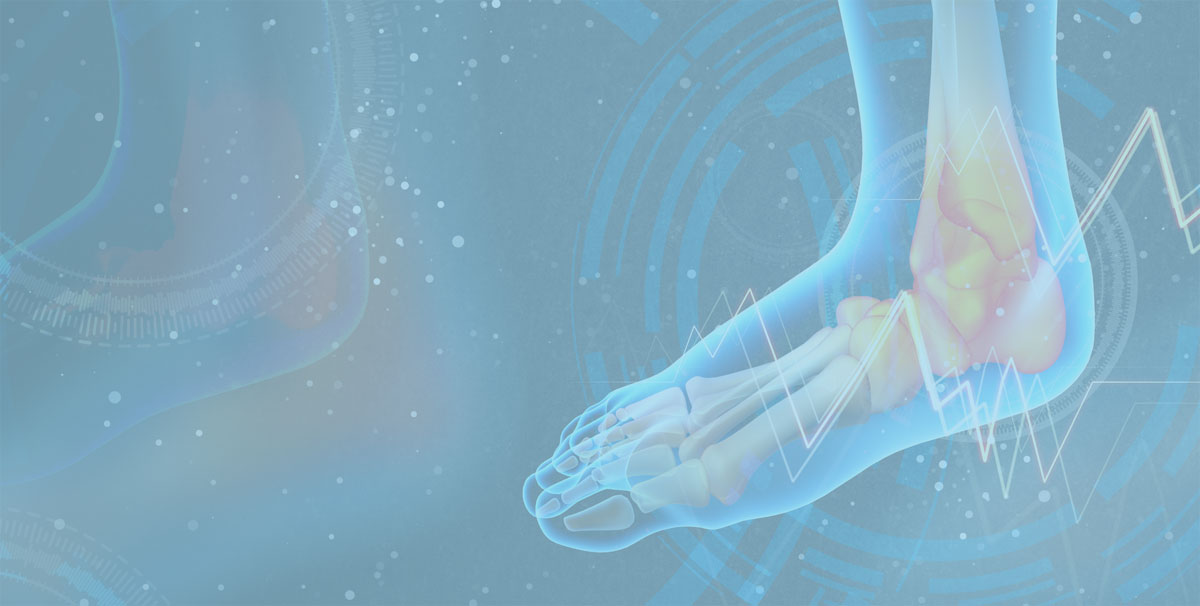
What is Metatarsalgia?
January 22, 2009 by orthotics
Filed under Foot Conditions
What is Metatarsalgia
Your ego used to be the only thing that got bruised during pickup basketball games. But lately, the jump’s gone out of your jump shot. You can still leap, but landing is pure torture. What’s more, running and even walking cause the same burning pain on the bottoms of your feet. If this sounds familiar, you may have metatarsalgia a condition marked by pain and inflammation in the ball of your foot.
Metatarsalgia frequently affects runners and other athletes who participate in high-impact sports. That’s because excessive amounts of running or jumping put extra stress on the metatarsals — the long bones located in the front part of your feet just below your toes. People with certain foot shapes that create more stress on the metatarsal bones also may have these problems.
Although generally not serious, metatarsalgia can sideline you. Fortunately, conservative treatments such as ice and rest can often relieve symptoms. And proper footwear, along with shock-absorbing insoles or arch supports, may be all you need to prevent or minimize future problems.
Symptoms
The main symptom of metatarsalgia is pain in the ball of your foot the part of the sole just behind your toes. The pain may be sharp, aching or burning. You may feel it in the area around the second, third and fourth toes or only near your big toe.
Other symptoms of metatarsalgia may include:
- Pain that gets worse when you stand, walk or run and improves when you rest
- Sharp or shooting pain in your toes
- Numbness or tingling in your toes
- Pain that worsens when you flex your feet
- A feeling in your feet as if you’re walking on pebbles or have a bruise from a stone
- Increased pain when you’re walking barefoot, especially on a hard surface
Sometimes these symptoms develop suddenly especially if you’ve recently increased your usual amount of running, jumping or other high-impact exercise but problems are more likely to develop over a period of months.
Causes
In each foot, five metatarsal bones run from your arch to your toe joints. The first metatarsal is shorter and thicker than the other four bones, which are usually similar in size. During the push-off phase when you walk, jump or run, your body weight is transferred to your toes and metatarsals. The first and second metatarsal bones take the brunt of this force, which can be as much as 275 percent of your body weight.
Most metatarsal problems develop when the impact load or the mechanics of your foot affect the way your weight is distributed. This can put excess pressure on the metatarsals, leading to inflammation and pain, especially in the metatarsal heads the rounded ends of the bones that connect with your toe bones.
Sometimes a single factor can lead to metatarsalgia. More often, several factors are involved, including:
- Intense training or activity.
Runners have the highest incidence of metatarsalgia, primarily because the front of the foot absorbs more force when running than during any other activity as much as 110 tons of force per mile. But anyone who participates in a high-impact sport is at risk. Training intensely or for long periods puts even more stress on the metatarsals, often leading to chronic irritation and inflammation. - Certain foot shapes.
A high arch can put extra pressure on the metatarsals. So can having a second toe that’s longer than the big toe, which causes more weight than normal to be shifted to the second metatarsal head. - Hammertoe.
This foot problem can develop when high heels or too-small shoes prevent your toes from lying flat. As a result, one of your toes usually the second curls downward because of a bend in the middle toe joint. This contraction depresses the metatarsal heads. - Bunion.
This is a swollen, painful bump at the base of your big toe. Sometimes the tendency to develop bunions is inherited, but the problem can also result from wearing high heels or too-small shoes. Bunions are much more common in women than in men. A bunion can weaken your big toe, putting extra stress on the ball of your foot. Sometimes surgery to correct a bunion can also lead to metatarsalgia. - Excess weight.
Because most of your body weight transfers to your forefoot when you move, even a few extra pounds mean more pressure on your metatarsals. Sometimes losing weight reduces or eliminates symptoms of metatarsalgia. - Poorly fitting shoes.
High heels, which cause more weight to be transferred to the front of the foot, are one of the most common causes of metatarsalgia in women. Shoes with a narrow toe box or athletic shoes that lack support and padding also can contribute to metatarsal problems. - Stress fractures.
Small breaks in the metatarsals or toe bones can be painful and change the way you put weight on your foot. - Morton’s neuroma.
This noncancerous growth of fibrous tissue most often occurs between the third and fourth metatarsal heads. It causes symptoms that are similar to metatarsalgia and can also contribute to metatarsal stress. Morton’s neuroma frequently results from wearing high heels or too-tight shoes that put pressure on your toes. It can also develop after high-impact activities such as jogging and aerobics. - Aging.
As you grow older, the fat pads on the balls of your feet become thinner. This makes the metatarsal bones more susceptible to injury.
Risk factors
Almost anyone can develop metatarsalgia, but you’re at higher risk if you:
- Participate in high-impactsports. Metatarsalgia is most likely if you’re a runner or participate in other sports that involve running or jumping, such as soccer, tennis, baseball, football or basketball. Swimming and cycling, which don’t put pressure on your forefoot, aren’t likely to cause metatarsalgia.
- Wear high heels or shoes that don’t fit properly. High heels transfer extra weight onto the front of your foot, and shoes that are too tight can compress your toes. Wearing athletic shoes that aren’t well padded or that aren’t appropriate for a particular sport for example, playing basketball in tennis shoes also can put you at risk of metatarsalgia.
- Are overweight. Extra pounds put more pressure on your metatarsals.
- Have other foot problems. Certain foot shapes such as high arches, a long second toe or unusually long metatarsals can contribute to metatarsalgia. So can conditions such as hammertoe, Morton’s neuroma, arthritis and even gout. These can cause pain and inflammation that change the way you walk and the distribution of weight in your feet.
Hip Pain
January 15, 2009 by orthotics
Filed under Foot Conditions
Hip Pain
The hip is a weight bearing joint and everything above the waistline is must be supported by the hips. A lot of us forget this simple fact but when you think about it it’s amazing that most people do not suffer more hip pain. When we are active, all of our weight bearing joints are hit with extra stress and strain. With some activities the body must endure excessive force on the joints and injury often occurs. Our bodies are built for this but any structural imbalance can cause problems if not treated properly.
For many, it is the structural imbalance which makes them prone to hip, lower back, knee, ankle and foot pain. Often these are a result of poor posture over time or injury. For instance if for some reason you suffer from a “fallen hip”, even though both hips are theoretically carrying the same amount of load, one may hurt because it is no longer aligned with the other. Also, it is not uncommon for people to have a misaligned foot or one leg slightly shorter than the other. With the hip things start from the bottom up and believe it or not a minor foot condition can lead to major hip pain.
Our feet support us much like the foundation of a home. If the foundation is not built properly the house may lean or suffer progressive structural damage over time. In this regard, the foundation is really the most important part of the home. If it isn’t right nothing will be. The same holds true with our bodies and structurally our feet may be they most important part of our bodies when it comes pain free activity. Any foot condition can cause pain up through the ankle, knee, hip and lower back.
Foot Problems can be natural or due to injury but your physician will need to rule out foot problems as a cause of hip pain first. You will be surprised to find that bringing the foot back into proper alignment through treatment may solve all your hip pain. The use of custom foot orthotics or arch supports is a very effective treatment for structure foot problems.
Regardless of the origin of hip pain, treatment will be similar to the treatment of other joint problems. A proper diagnosis must be made and a treatment plan developed. Treatment may be as simple as rest to reduce inflammation or a surgical may be required as a last resort. A common sense approach for prevention is also recommended. Make sure you are allowing your body to rest, exercise to keep the muscles strong and use properly fitted footwear while active. If you are feeling pain, avoid the activity and seek medical advice and do not be surprised if your podiatrist holds the solution for your hip pain.
High Arch Feet
January 15, 2009 by orthotics
Filed under Foot Conditions
High Arch Feet
Most people have an arch along the inner side of the foot, leaving a gap between the ground and the foot. Some feet have a higher arch than average. This is the opposite of a flatfoot. In combination with a higher arch, the ankle may be “rolled” outwards slightly – this is the opposite of a pronated foot. Often this gets referred to as pes cavus.
What does a high arch foot look like?
When standing with weight on the foot, the arch will appear higher. The heel often tilted inwards at the ankle (but not always). In many the toes will appeared clawed. When not standing the front half of the foot (forefoot) will appear to be dropped below the level of the rearfoot.
What causes high arch feet?
High arch feet may just be a normal variant (ie some people just have higher arches), some may be hereditary (ie runs in the family) and in some cases there may be an underlying neurological problem that is causing it.
What are the symptoms of a high arch foot?
The symptoms of a high arch foot will vary depending on how severe the condition is and the activity levels of the person with it. Most will have no pain or any other symptoms. Symptoms may vary from a mild problem with shoe fitting to significant disability
Some of the symptoms can include:
- there may be corns and calluses under the bases of the first and fifth toes.
- Shoe may not fit very well because of the high arch and the clawed toes.
- There may be some pain in the arch area, because of the pressure that it is under.
- The feet will feel stiffer and less mobile than a foot that does not have a high arch.
- Ankle sprains are more common in those with a high arched foot.
How is the high arched foot treated?
This will depend on what is causing the pain, if anything. Initially a careful investigation is needed to rule out any neurological condition is causing the high arched foot.
Generally, treatment can involve:
- The use of foot orthotics or insoles to support and protect the foot and relieve pressure areas.
- Different sorts of pads made from silicone or felt can be used to get pressure off the painful areas
- If corns and callus are present, they can be treated by a Podiatrist.
- Proper fitting of footwear is important.
- In very sever cases, especially if pain is present and the height of the arch is progressively increasing in height, surgery may be considered.
What is a Heel Spur?
January 15, 2009 by orthotics
Filed under Foot Conditions
Heel Spurs
Patients and doctors often confuse the terms heel spur and plantar fasciitis. While these two diagnoses are related, they are not the same. Plantar fasciitis refers to the inflammation of the plantar fascia–the tissue that forms the arch of the foot. A heel spur is a hook of bone that can form on the heel bone (calcaneus) and is associated with plantar fasciitis.
About 70 percent of patients with plantar fasciitis have a heel spur that can be seen on an X-ray. However, many patients without symptoms of pain can have a heel spur. The exact relationship between plantar fasciitis and heel spurs is not entirely understood. For more information about plantar fasciitis.
Who gets heel spurs?
Heel spurs are common in patients who have a history of foot pain caused by plantar fasciitis. In the setting of plantar fasciitis, heel spurs are most often seen in middle-aged men and women, but can be found in all age groups. The heel spur itself is not thought to be the primary cause of pain, rather inflammation and irritation of the plantar fascia is thought to be the primary problem. A heel spur diagnosis is made when an X-ray shows a hook of bone protruding from the bottom of the foot at the point where the plantar fascia is attached to the heel bone.
Why did I get a heel spur?
The plantar fascia is a thick, ligamentous connective tissue that runs from the calcaneus (heel bone) to the ball of the foot. This strong and tight tissue helps maintain the arch of the foot. It is also one of the major transmitters of weight across the foot as you walk or run. That’s why tremendous stress is placed on the plantar fascia.
When a patient has plantar fasciitis, the plantar fascia becomes inflamed and degenerative (worn out)–these abnormalities can make normal activities quite painful. Symptoms typically worsen early in the morning after sleep. At that time, the plantar fascia is tight so even simple movements stretch the contracted plantar fascia. As you begin to loosen the plantar fascia, the pain usually subsides, but often returns with prolonged standing or walking.
Heel spurs form in some patients who have plantar fasciitis, and tend to occur in patients who have had the problem for a prolonged period of time. While about 70 percent of patients with plantar fasciitis have a heel spur, X-rays also show about 50 percent of patients with no symptoms of plantar fasciitis also have a heel spur.
Treatment of heel spurs is the same as treatment of plantar fasciitis. Because these problems are related, the treatment is the same. The first step in the treatment of a heel spur is short-term rest and inflammation control. Here are the steps patients should take in order to cure the symptoms of plantar fasciitis and heel spurs:
Rest
The first treatment step is avoiding activities that aggravate symptoms. For example, take a few day off jogging or prolonged standing to try to rest the painful foot. Just resting usually helps eliminate the most severe pain, and will allow the inflammation to begin to settle down.
Big Toe Joint Pain
December 31, 2008 by orthotics
Filed under Foot Conditions
Big Toe Joint Pain
As funny as Big Toe Joint Pain may sound it is actually a very painful condition for anyone who suffers from it. In fact, arthritis in the foot is most commonly found in the metatarsophalangeal joint which happens to be at the base of the Big Toe. The pain is most often associated with stiffness and as a result walking can become very difficult.
As with any joint, bones are covered with smooth cartilage. The cartilage can be disrupted through injury, excessive wear, or trauma. The result is often a rubbing of the bones and may cause bone spurs or other types of scar tissue to develop. The scar tissue can inhibit the Big Toe from bending naturally during walking and may even keep it from bending at all.
This condition is called Hallux rigidus and is common in adults as they enter middle age. No matter the cause, over time the results are much the same. The articular cartilage is damaged to the point that stress on the joint itself becomes a physical problem.
Those suffering from Big Toe Joint Paint may experience pain while active, while pushing off on the toes during walking, swelling, hard growths on the top of the foot, and complete stiffness in the Big Toe.
When caught early, the treatment for Hallux rigidus is quite easy. In its early stages sufferers may notice they are walking on the outside of the foot as they experience pain near the big toe. This alleviates the discomfort but is a sign there may be trouble ahead. A trip to the podiatrist is advised because if the joint pain and inflexibility continue to the point that a bone spur may develop on the top of the foot, the treatment can be more risky and the recovery painful and slow.
Podiatrists will perform a thorough exam of the the foot and look for signs of Hallux rigidus. X-rays are often used to try and locate the position and/or size of possible bone spurs and the amount of wear and tear in the joint itself. As a result a podiatrist can prescribe treatment.
In most cases, the usual anti-inflammatory medicines will reduce the swelling and help with the pain. Using ice and common sports remedies are also useful but cannot halt the progression of this condition. As with any foot condition wearing properly fitted shoes will drastically reduce the symptoms. The use of custom foot orthotics or arch supports will help support the foot and bring the entire foot into proper alignment therefore reducing excess pressure on the joint.
In severe cases of Hallux rigidus surgical treatment may be necessary and should be discussed with your physician. Regardless of the treatment options you seek, keep in mind that paying attention to complete foot health can stop many painful foot conditions from developing in the first place.
Arch Strain
December 17, 2008 by orthotics
Filed under Foot Conditions
Arch Pain / Arch Strain
Arch Strain or Arch Pain is simply inflammation in the arch of the foot causing a burning feeling or in some cases acute pain. There are many causes for this type of foot pain.
There may be some structural instability or imbalance in the foot which can directly cause discomfort. The most common ocurrence of foot arch pain is as a result of Plantar Fasciitis. Plantar Fasciitis Orthotics can be fabricated to help alleviate or correct the pain.
There is a band of tissue running across the bottom of the foot called the plantar fascia extending from the forefoot to the heel. When the plantar fascia becomes stressed due to over exertion or irritation, Plantar Fasciitis can occur.
Those with flat feet often suffer from Plantar Fasciitis and experience pain in the heel and arch when the plantar fascia is stretched at the heel. An indicator of Plantar Fasciitis is heal or arch pain occurring in the morning or after long periods of rest.
Extreme discomfort is often the extent of the damage associated with this condition but in some cases, if not treated, heel spurs can occur. Heel spurs are bony protrusions from the heel.
Plantar Fasciitis and foot arch pain are easy to treat. The first line of defense is choosing proper shoes. Avoid high heels and look for shock absorbing soles. Custom Orthotics are a great method of treating Plantar Fasciitis especially when it’s due to flat feet. Orthoses will correct the instability in the foot and provide proper arch support.
When suffering from foot discomfort due to a strained arch it is recommended to seek out a custom fit orthotic and not when purchased over the counter at a drugstore or supermarket. A device that has not been cast from a 3-D mold of the foot will not correct the specific problems of the foot. Improper fitting inserts or insoles could result in damage to the foot or an increase in pain.
Foot Orthotics – Give the Gift of Foot Pain Relief
December 5, 2008 by orthotics
Filed under Ask The Experts
This year give someone you love a gift that will last a lifetime. Those suffering from foot pain, heel pain, knee pain and back pain would love nothing more to find relief this holiday season.
A pair of custom foot orthotics from Footcare Express is exactly what the doctor ordered. Literally! A custom orthotic device will bring the foot and ankle into proper alignment an in many cases allow a person to walk, run, or bend properly for the very first time in their lives.
Not everyone is able to offer a truly custom foot orthotic and it CANNOT be found in any drugstore or infomercial. To be custom, a mold of each foot must be cast and analyzed by a professional Pedorthist or Podiatrist and then fabricated by an experienced lab technician according to a prescription.
It is very rare for one of our feet to exactly match the other so the chances of your foot or the foot of someone you love to match an orthotic insert that is already made is slim to none.
Here is how Footcare Express can deliver a truly custom fit orthotic to your door for Christmas. First we send our Quickmeasure Kit to be wrapped and placed under the tree. When the gift is opened the recipient will make a custom mold of their foot according to the included instructions and have a perfect foot cast molded in seconds. Then they simply return the foot cast to Footcare Express in the pre-paid packaging and pain relief will arrive in a matter of days.
It is a particularly good time of year to send Custom Foot Orthotics as a gift because many people we love are about to embark on their New Year’s Resolutions of good health through exercise. Orthoses will help prevent the type of injuries suffered from over exertion or bad form. These injuries include shin splints, ankle sprains and strains, torn ligaments and muscles and knee, hip and back pain.
Everyone can use the gift of proper foot care and pain relief. Whether it is a grandparent who suffers minor pain or stiffness while walking, a nephew looking for an advantage on the soccer field or a runner looking to run pain free, give the gift that will change someone’s life forever.
Get Your Custom Foot Orthotics right here Online! or Call 1-877-OUR-FEET